Voice cloning and text-to-speech get used interchangeably, and that mix-up costs people money — some pay for cloning they don't need, others fight with stock voices when a clone would have solved everything in one step.
The two technologies are related, but they answer different questions. TTS answers "how do I turn this text into audio?" Voice cloning answers "how do I turn this text into audio that sounds like a specific person?"
This guide draws the line clearly: how each works, where each wins on quality, cost, speed, and rights, and a decision matrix that tells you exactly which one your project needs.
The 30-Second Answer
Text-to-speech (TTS) is software that converts written text into spoken audio using pre-built synthetic voices. You pick a stock voice, paste your text, and get speech in seconds — no training, no setup, and often no cost.
Voice cloning is an AI technique that learns the sound of a specific real person's voice from a short audio sample, then generates speech in that voice from any text. The output is still text-to-speech under the hood — but the voice identity is yours, not a stock preset.
The simplest way to hold the distinction: every voice clone speaks through TTS, but almost no TTS voice is a clone. Cloning adds one step — capturing a real voice identity — before synthesis begins.
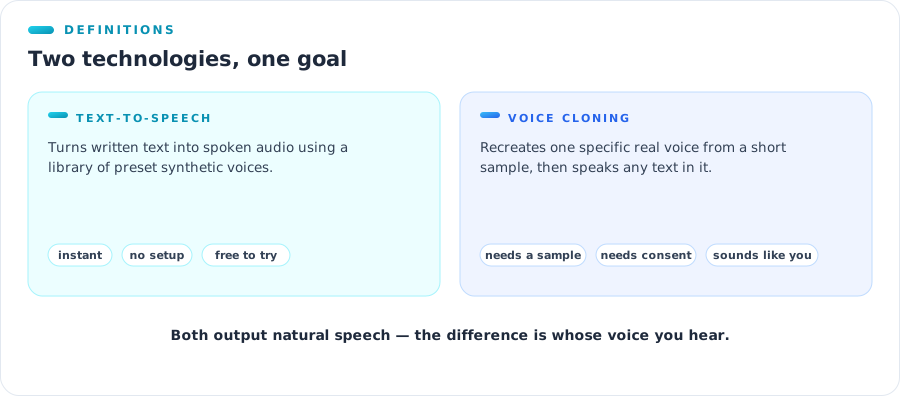 The one-line difference: stock voice vs your voice
Key takeaway
Choose based on voice identity, not audio quality. Modern stock TTS already sounds natural. Pay for cloning only when the audio must sound like you — or a specific person who has given consent.
What Is Text-to-Speech?
Text-to-speech is the older and broader of the two technologies. It has been around since screen readers in the 1980s, but neural networks transformed it — today's TTS voices handle rhythm, stress, and intonation well enough that casual listeners often can't tell they're synthetic.
How TTS works
A modern TTS system runs your text through three stages:
- Text analysis. The system expands numbers and abbreviations ("Dr." becomes "doctor"), works out sentence structure, and predicts phrasing.
- Acoustic modeling. A neural network converts the processed text into an acoustic representation — pitch, timing, and energy over time.
- Vocoding. A final model renders that representation into an actual audio waveform you can play or download.
All of this happens in near real time. Paste a paragraph, and audio comes back in a second or two.
The stock voices themselves come from professional voice actors who recorded hours of studio audio under contract. That's why a good preset voice sounds so clean: the training data was captured under ideal conditions, by people who read for a living, and licensed properly for synthetic use.
Strengths of TTS
Speed and simplicity are unbeatable. There is no training step, no sample to record, and nothing to configure beyond picking a voice and a speed.
It's widely available free. AnyVoice's free text to speech tool offers 150+ voices across 60+ languages and accents with no sign-up — up to 1,000 characters per generation as a guest, or 5,000 with a free account.
Language coverage is huge. Stock voice libraries span dozens of languages and regional accents out of the box. Localizing content into Spanish, Hindi, or Japanese is a dropdown change, not a project.
The licensing is clean. Stock voices come licensed by the platform. You never need to chase consent, because no real person's identity is being reproduced.
Limits of TTS
The voice is never yours. Stock voices are shared identities — the same preset voice reading your video is reading thousands of other people's videos too.
Brand consistency is fragile. If a platform retires or changes a stock voice, your "sound" changes with it, and there's nothing you can do.
Emotional range is generic. Good stock voices read naturally, but they perform in one broadly neutral style. They can't reproduce the specific warmth, pacing quirks, or accent that makes a real person's delivery recognizable.
What Is Voice Cloning?
Voice cloning arrived much more recently — usable zero-shot cloning (cloning from seconds of audio, with no per-voice training run) only became mainstream in the early 2020s. It builds directly on TTS but adds the crucial step: capturing a real voice identity first.
How voice cloning works
Cloning replaces the stock voice identity with a learned one:
- Sample capture. You record or upload a short clip of the target voice. With modern systems, around 30 seconds of clean audio is enough — AnyVoice generates a working clone from a sample like that in about 15 seconds.
- Voice embedding. The model distills the sample into a compact mathematical fingerprint of the voice: its timbre, pitch range, accent, and habits of delivery.
- Conditioned synthesis. From then on, the TTS engine generates speech conditioned on that fingerprint — any text, spoken as that person.
If you want the deeper technical walkthrough, we've covered the full pipeline in how AI voice cloning works.
Strengths of voice cloning
The output is a specific person. That's the entire point — narration in your voice, at scale, without you sitting in front of a microphone for every take.
It scales a real human identity. One clone can narrate a 10-hour audiobook, 50 product videos, and a year of podcast intros with identical tone. No fatigue, no studio scheduling, no re-records when the script changes.
It unlocks languages you don't speak. Cross-lingual cloning can carry your voice identity into other languages — your sound, speaking Spanish — which no stock voice can ever do.
Limits of voice cloning
It costs more. Training and premium synthesis have real compute costs, so cloning generally sits behind paid tiers. (AnyVoice includes one cloned voice on the free plan so you can test before paying.)
Quality depends on your sample. A noisy, echoey, or clipped recording produces a muddy clone. Stock voices skip this failure mode entirely because they were recorded in studios.
Consent is non-negotiable. Cloning any voice that isn't your own requires the owner's informed permission. Laws now back this up — we've mapped the rules in is AI voice cloning legal, and the short version is that unauthorized clones carry genuine legal risk in 2026.
Voice Cloning vs TTS: Head-to-Head
Here's how the two compare on the five factors that actually drive the decision.
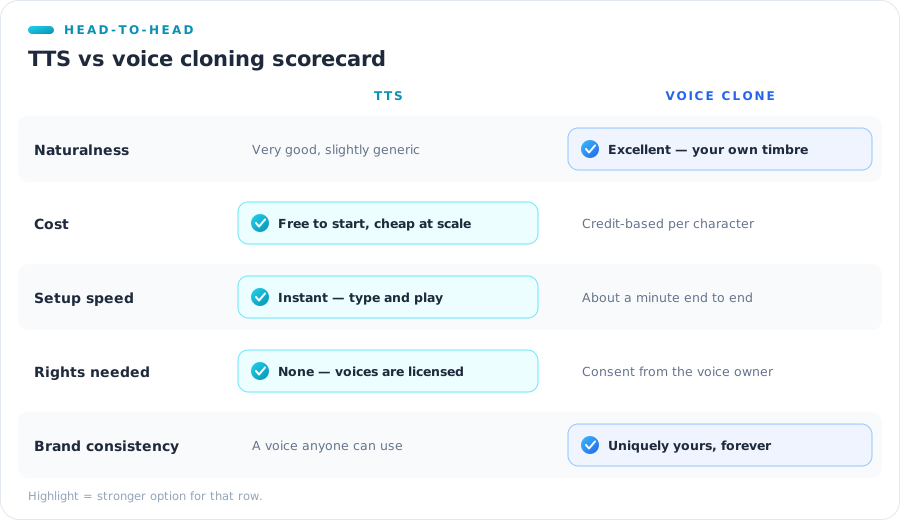 Five factors, two winners each — the tie-breaker is voice identity
| Factor | Text-to-Speech | Voice Cloning |
|---|---|---|
| Voice identity | Stock, shared with everyone | A specific real person |
| Naturalness | High with modern neural voices | High, plus personal delivery traits |
| Cost | Free tiers common | Typically paid; free trials exist |
| Setup time | Zero — pick a voice and go | Minutes — record sample, consent, clone |
| Rights & consent | Handled by the platform | Requires owner's informed consent |
Naturalness and audio quality
This one surprises people: on raw naturalness, good stock TTS and good cloning are close. Both use the same generation of neural synthesis.
The difference is character. A stock voice sounds like a fluent, pleasant announcer. A clone sounds like someone — with the micro-habits, accent, and warmth that make a voice recognizable. If listeners know the speaker, the gap is obvious; if they don't, it may not matter.
Cost
TTS wins on cost, decisively. Free tiers are standard across the industry — AnyVoice's free tool includes unlimited listening and free MP3 downloads with no account.
Cloning is a paid capability almost everywhere. On AnyVoice, pricing works on a simple 1 character = 1 credit basis, with a free plan (5,000 credits and one cloned voice) and paid plans from $9.99/month for 100,000 characters and three voices.
Speed to first audio
TTS: seconds. Paste, pick, play.
Cloning: minutes — once. Record a 30-second sample, confirm the consent step, and the clone itself builds in about 15 seconds. After that one-time setup, generating with a clone is exactly as fast as stock TTS. The setup cost is real but paid only once per voice.
Control, editing, and revisions
Both technologies share one enormous advantage over human recording: edits are free. Change a sentence in the script, regenerate, done — no studio rebooking, no matching room tone, no splicing.
Where they differ is who the edit sounds like. With TTS, a revision made six months later sounds identical to the original, as long as the stock voice still exists. With a clone, revisions match you — including that podcast episode you recorded live, which is why creators use clones to patch flubbed lines into otherwise human recordings.
One practical note: script-level control (speed, pauses, emphasis) works the same in both. Whatever pacing controls a platform gives its stock voices, its clones inherit.
Rights and consent
The legal shapes are completely different, and this catches teams off guard.
With stock TTS, the platform licenses the voice to you — voice actors were paid, contracts signed, and normal commercial use is covered.
With cloning, you are reproducing a real person's identity, so responsibility shifts to you: clone your own voice freely, but anyone else's requires informed consent. AnyVoice records a consent confirmation before any clone is created and watermarks generated audio, which keeps you aligned with 2026 rules like the EU AI Act's synthetic-audio marking duty (applying from August 2, 2026).
Use-case fit
The factors above converge into a simple pattern by use case.
Utility audio
Notifications, IVR menus, screen-reading, internal tools — TTS, always. Nobody needs these to sound like a specific person.
Content with a face
Podcasts, personal YouTube channels, course narration — cloning earns its cost, because the voice is the brand.
Volume localization
Dubbing one video into 12 languages, or generating 500 product descriptions — start with TTS; move to cross-lingual cloning only if the source speaker's identity matters in every market.
Rule of thumb
If replacing the voice with a different pleasant voice would change nothing for your audience, use TTS. If it would break the experience, clone.
Which Should You Use? A Decision Matrix
Here's the scenario-by-scenario call, based on the projects we see most.
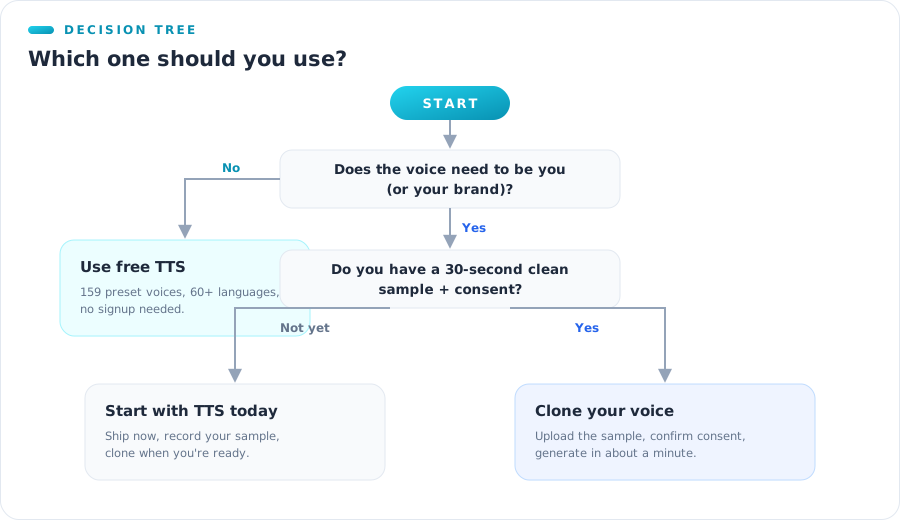 Follow the identity question first — it settles most cases
| Scenario | Best fit | Why |
|---|---|---|
| Faceless YouTube / explainer videos | TTS is enough | Stock voices are natural, free, and instantly available |
| Creator channel in your own voice | Worth cloning | Voice consistency is the brand |
| Audiobook of your own book | Worth cloning | Readers expect the author; 10+ hours is unrecordable by hand |
| Corporate e-learning at scale | TTS is enough | Neutral delivery is fine; cost scales with volume |
| Podcast intros, ads, and corrections | Worth cloning | Patch a flubbed line without re-recording a session |
| Accessibility (reading tools, aids) | TTS is enough | Clarity beats identity; free matters here |
| Multilingual product videos | Start TTS, clone later | Test markets cheap; add identity where it pays |
| Voice assistant / app voice | TTS is enough | A licensed stock voice avoids consent complexity |
Video narration
Default to TTS. A tutorial, listicle, or product demo needs clarity, not celebrity. Switch to a clone only when the channel's audience subscribes to you.
The exception
If you already appear on camera in some videos, mixing your real voice and a stock voice across uploads feels jarring. That inconsistency is exactly what cloning fixes.
Audiobooks and long narration
Clone if you're the author or the named narrator. Ten hours of manual narration is a week in a studio; a clone does it overnight, and revisions are a paste-and-regenerate.
When TTS still wins
Reference material, documentation, or compilations with no personal narrator — a premium stock voice reads these perfectly well at zero cost.
Accessibility and everyday tools
TTS, clearly. Text readers, language practice, proofing your writing by ear — these need fast, clear, free audio. This is also where free tools do the most good: the WHO projects that nearly 2.5 billion people will live with some degree of hearing loss by 2050, and text-audio conversion tools serve accessibility needs in both directions.
Teams, agencies, and client work
Mixed — decide per deliverable, not per team. Agencies producing explainer videos for many clients live happily on stock TTS: the voice just needs to be professional, and free generation keeps margins healthy.
The moment a client wants their founder's voice on the ads, you're in cloning territory — and the consent workflow becomes part of the deliverable. Get the written consent before you quote the project, not after.
A note on client-facing consistency
If you narrate client work with a stock voice, record which voice and settings you used per client. Reusing the same stock voice across two competing clients in the same niche is awkward in a way nobody warns you about.
Multilingual localization
Start with stock voices — 60+ languages are one dropdown away, so you can test a market for free before investing. Graduate to cross-lingual cloning when a consistent brand voice across languages starts driving measurable value.
Try Both Free
The fastest way to settle this decision is to hear it.
Test TTS right now: paste your script into our free text to speech tool — 150+ voices, 60+ languages, no account needed — and if it's for offline use, download it as an MP3 with one click.
Test cloning with your own voice: the AnyVoice free plan includes one voice clone and 5,000 characters of generation. Record 30 seconds, confirm consent, and compare the clone against the stock voices on the same script. If the difference doesn't move you, TTS was your answer all along — and you found out for free. Full plan details are on the pricing page.
Either way, start with the identity question: does this audio need to sound like someone in particular? Answer that, and the rest of the decision makes itself.
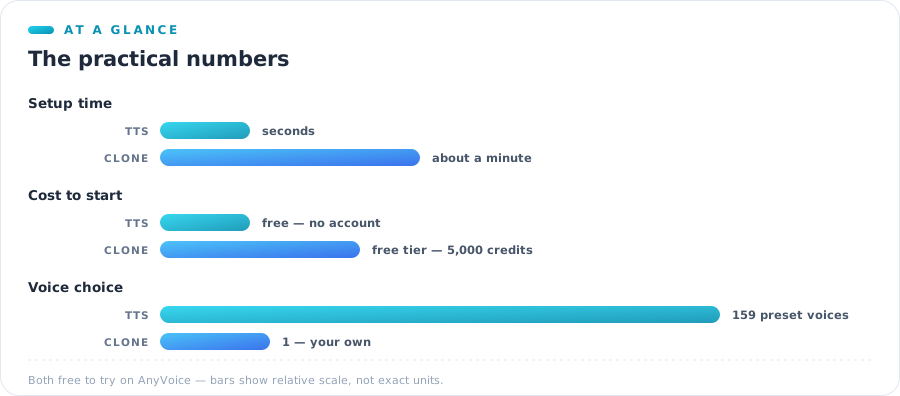 Where each option wins: cost and speed vs identity and consistency
FAQ: Voice Cloning vs Text-to-Speech
What is the difference between voice cloning and text-to-speech?
Text-to-speech converts written text into audio using pre-built stock voices. Voice cloning first learns a specific real person's voice from a short sample — often 30 seconds or less — then speaks any text in that voice. Every clone uses TTS to talk; almost no TTS voice is a clone.
Is voice cloning better than text-to-speech?
Neither is better — they solve different problems. Stock TTS is faster, cheaper, and covers 60+ languages instantly. Cloning is the only option when audio must sound like you or a specific approved speaker.
Does voice cloning cost more than TTS?
Usually, yes. Stock TTS is widely available free — AnyVoice offers 150+ voices at no cost. Cloning involves training and premium synthesis, so it typically sits behind paid plans; AnyVoice includes one cloned voice free, with paid plans from $9.99/month.
Do I need consent for text-to-speech voices?
No — stock voices are licensed for you by the platform. Cloning is different: any voice other than your own requires the owner's informed consent, and 2026 laws make unauthorized clones genuinely risky.
Can text-to-speech sound like my own voice?
Not by itself. Stock voices are fixed identities. To generate audio in your own voice, you need cloning: record a short clean sample, confirm consent, and the model speaks any script as you.
Which is better for YouTube: cloning or TTS?
For faceless or utility channels, stock TTS keeps costs at zero and sounds great. For a channel built around you, cloning keeps your voice consistent on every upload — even the ones you didn't have time to record.
Still mapping the basics? Start with what AI voice cloning is, then see how the cloning pipeline works under the hood.